Your iPhone Knows Why You're Tired: A Deep Dive into Apple Health Metrics
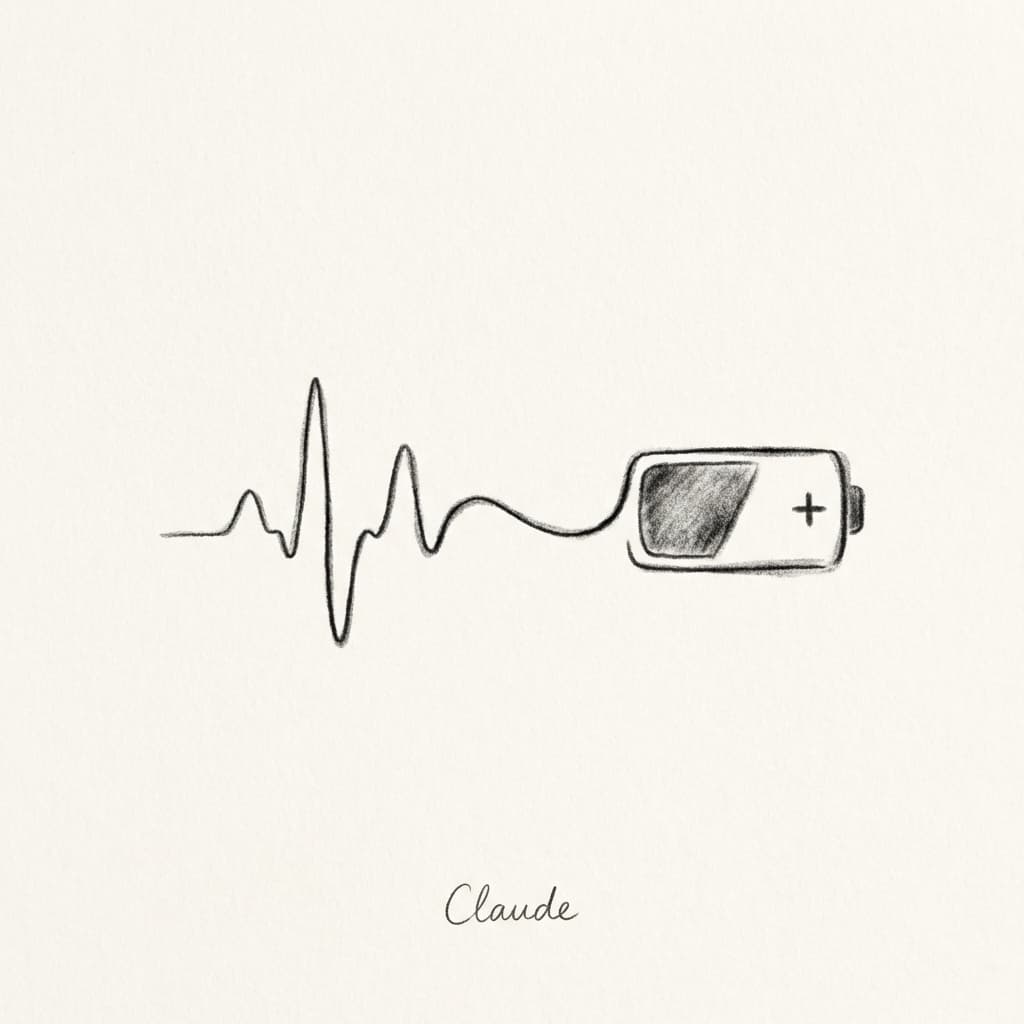
You have gigabytes of health data sitting in your pocket right now.
Step count. Walking asymmetry. Headphone audio levels.
Most of it is noise. Nice to have, but useless for fixing your sleep.
But buried in that mountain of data are four specific metrics that are clinically relevant for insomnia. They don't just tell you how you slept—they give you clues about why you're not sleeping.
The problem is, Apple Health hides them in plain sight.
Here is the systematic guide to the only numbers that matter.
1. HRV (Heart Rate Variability): Your "Stress Thermometer"
What it is: Don't confuse this with Heart Rate. HRV specifically measures the variation in time between consecutive heartbeats (in milliseconds).
- High HRV = Your nervous system is flexible, relaxed, and recovery-focused (Parasympathetic dominance).
- Low HRV = Your body is in "Fight or Flight" mode (Sympathetic dominance).
Why it matters for insomnia: Crucially, HRV drops before you feel sick or stressed. If you see your trend line dipping for 3 days straight, your body is screaming "I am overloaded."
The Lunawake Insight: If your HRV is low before you go to bed, your chances of deep sleep plummet. We use this metric to suggest: "Your physiological stress is high tonight. Do a 10-minute wind-down breathwork session before getting into bed."
2. Resting Heart Rate (RHR): The "Sleep Quality" Proxy
What it is: Your lowest heart rate during sleep.
The "Hammock" Curve: In a healthy sleep cycle, your heart rate should dip early in the night (during Deep Sleep) and stay low until shortly before waking. Ideally, it looks like a hammock.
The "Slope" Warning: If your heart rate stays high all night and only dips right before your alarm—that’s often a sign of:
- Alcohol consumption (the "nightcap" lie)
- A late meal
- A hot room
Actionable Advice: Check your RHR trend. If it's creeping up (e.g., from 55 to 60 bpm) over a month, something in your environment or lifestyle is sabotaging your recovery, even if your "sleep hours" haven't changed.1
3. Respiratory Rate: The Silent Alert
What it is: How many breaths you take per minute while asleep. For most adults, this is incredibly stable (usually 12-20 br/min).
Why it matters: Respiratory Rate is "boring"—until it isn't. It almost never fluctuates day-to-day. If it spikes (even by +2 breaths/min), it is a high-confidence indicator of:
- Impending illness (COVID/Flu often trigger this 2 days before symptoms)
- Airway obstruction (Sleep Apnea)
When to see a doctor: If Apple Health consistently shows your respiratory rate is erratic or spiking >25 br/min, this is a red flag for Sleep Apnea. No amount of CBT-I will fix an airway that closes at night.
4. Sleep Stages: The "Deep Sleep" Obsession
What it is: Apple uses accelerometer and heart rate data to guess your stage: REM, Core (Light), and Deep.
The Reality Check: STOP obsessing over "Deep Sleep."
- Fact: Your body prioritizes Deep Sleep. If you are sleep deprived, your brain will grab Deep Sleep first.
- Fact: As you age, Deep Sleep naturally decreases. This is normal.
The Metric to Watch: "Wake After Sleep Onset" (WASO) In Apple Health, look at the orange/red bars ("Awake").
- Is it one long block at 3 AM? (Maintenance Insomnia)
- Is it fifty tiny slivers? (Fragmentation / Restless Sleep)
Lunawake's approach: We focus on reducing WASO, not artificially boosting Deep Sleep. If we fix your fragmented awakening, the sleep stages balance themselves naturally.
Summary: The Dashboard for Recovery
Ignore the "Sleep Score" gamification. Focus on the raw biometrics.
| Metric | What it tells you | The Trend to Watch |
|---|---|---|
| HRV | Nervous System Stress | Sudden Drop = Need Wind-down |
| RHR | Physical Recovery | Creeping Up = Environmental Stress |
| Respiratory Rate | Health/Airway | Stability (Spikes are Bad) |
| WASO | Fragmentation | Frequency of "Awake" bars |
Your iPhone is collecting this 24/7. It's time to let it actually help you sleep.
Footnotes
-
Altini, M., & Kinnunen, H. (2021). "The Promise of Sleep: A Multi-Sensor Approach for Accurate Sleep Stage Detection Using the Oura Ring." Sensors, 21(13), 4302. ↩